
Business Scaling: Challenges, Strategies & How to Grow Successfully (2026 Guide)
Introduction
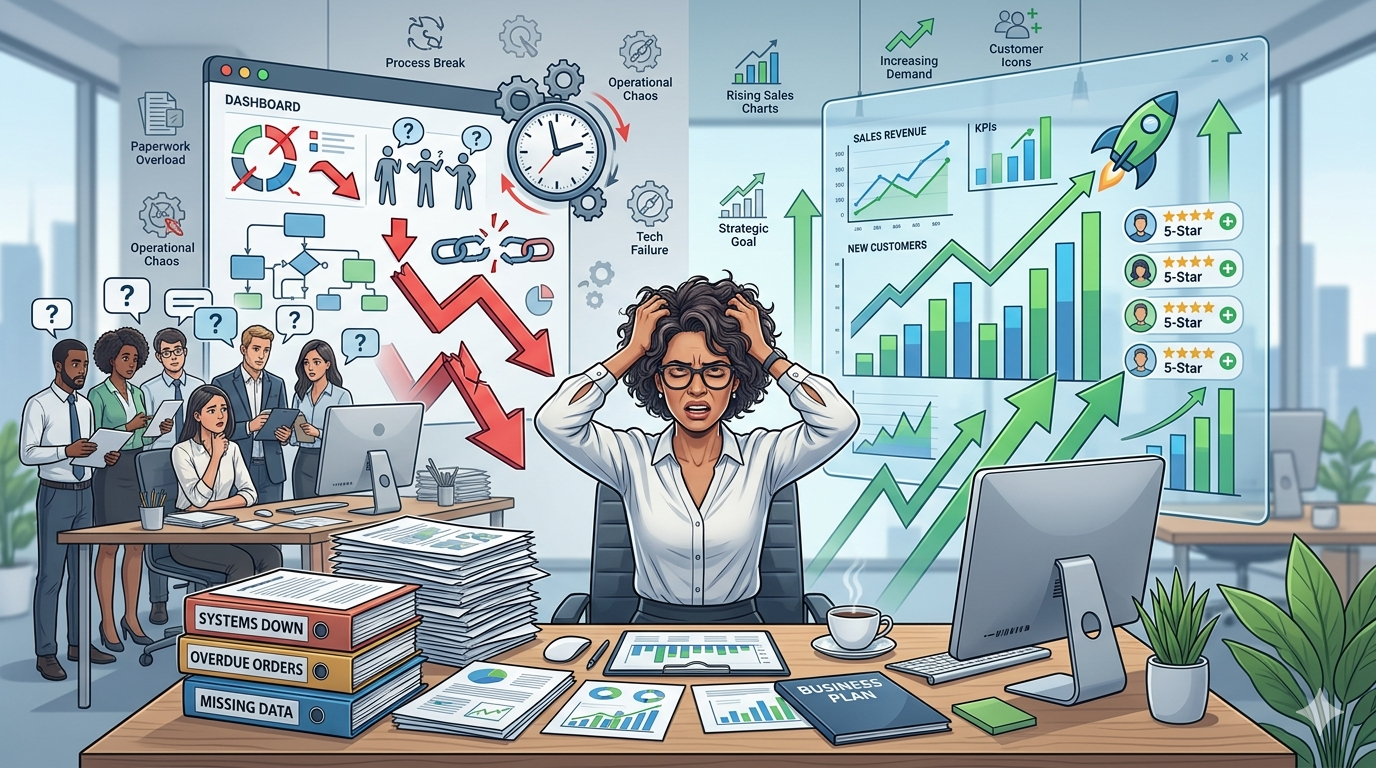
Scaling a business sounds exciting—more revenue, more customers, and more growth. But the reality is often more complex. Many entrepreneurs quickly discover that business scaling comes with hidden obstacles that can slow progress or even break operations.
If you’re dealing with scaling problems in small business, you’re not alone. From limited resources to operational chaos, most companies face serious business growth challenges when they try to expand. The key is not just growing—but scaling smartly.
In this guide, you’ll learn what scaling really means, why businesses struggle to scale, and proven strategies to grow sustainably.
What Is Business Scaling?
At its core, business scaling means increasing revenue without a proportional increase in costs. It’s about doing more with less.
What does scaling a business mean?
Scaling a business means:
- Expanding operations efficiently
- Increasing profits without dramatically increasing expenses
- Building systems that handle growth smoothly
Growth vs Scaling
- Growth: Revenue increases, but so do costs
- Scaling: Revenue increases faster than costs
Scaling is what turns a small business into a sustainable, long-term success.
Business Growth Challenges Every Company Faces
Every company, no matter the size, faces business growth challenges. But for small businesses, these challenges can be more intense.
Common business challenges:
- Limited capital
- Lack of skilled team members
- Poor systems and processes
- Increasing competition
As businesses grow, complexity increases. What worked at the startup stage often fails during scaling.
Top Scaling Problems in Small Business
Understanding the most common scaling problems in small business helps you avoid costly mistakes.
Limited Financial Resources
Cash flow is one of the biggest barriers.
- Difficulty securing funding
- High operational costs
- Poor financial planning
Without proper funding, scaling becomes risky.
Operational Inefficiencies
Many small businesses rely on manual processes.
- No automation
- Poor workflows
- Time wasted on repetitive tasks
This creates bottlenecks as demand increases.
Hiring & Team Issues
Scaling requires the right people.
- Hiring too fast or too slow
- Lack of leadership
- Skill gaps in key areas
A weak team can slow down growth significantly.
Weak Business Infrastructure
Without strong systems, scaling collapses.
- No CRM or automation tools
- Poor communication systems
- Lack of scalable processes
Infrastructure must grow with the business.
Inconsistent Customer Acquisition
Growth depends on steady customers.
- Weak marketing strategies
- Poor lead generation
- No predictable sales system
Without consistent leads, scaling becomes unstable.
Why Businesses Struggle to Scale
Many companies hit a plateau. Understanding why businesses struggle to scale is critical.
Key reasons:
- Lack of clear strategy
- Poor leadership decisions
- Fear of change
- Inefficient operations
Scaling isn’t just about resources—it’s about mindset and execution.
Key Stages of Business Growth and Scaling
Every business goes through different stages of business growth.
1. Startup Phase
- Focus on product-market fit
- Limited revenue
- High uncertainty
2. Growth Phase
- Increasing customers
- Expanding operations
- Hiring begins
3. Expansion Phase
- Entering new markets
- Scaling systems
- Strong revenue growth
4. Maturity Phase
- Stable operations
- Optimized processes
- Focus on sustainability
Understanding these stages helps you plan your startup growth strategy effectively.
Proven Scaling Strategies for Small Business
Now let’s focus on solutions. These scaling strategies for small business can help you grow sustainably.
Build Scalable Systems & Processes
- Automate repetitive tasks
- Use CRM systems
- Standardize workflows
This reduces dependency on manual work.
Focus on High-ROI Marketing Channels
- Invest in SEO and content
- Use paid ads strategically
- Optimize conversion funnels
Smart marketing drives consistent growth.
Strengthen Financial Management
- Track cash flow carefully
- Plan budgets
- Avoid unnecessary expenses
Strong finances support long-term scaling.
Invest in Technology & Automation
- Use project management tools
- Automate customer communication
- Implement analytics tools
Technology enables faster and smoother scaling.
Develop a Strong Leadership Team
- Hire experienced managers
- Delegate effectively
- Build a clear organizational structure
Leadership is the backbone of scaling.
Optimize Customer Experience
- Improve support systems
- Gather feedback
- Enhance product/service quality
Happy customers drive repeat business.
Business Growth Plan: How to Scale Step-by-Step
A solid business growth plan is essential.
Step 1: Set Clear Goals
Define revenue targets and growth metrics.
Step 2: Analyze Current Performance
Identify strengths and weaknesses.
Step 3: Identify Growth Opportunities
Explore new markets, products, or services.
Step 4: Implement Strategies
Execute your business development growth strategy.
Step 5: Track and Optimize
Measure results and adjust accordingly.
Startup Growth Challenges
Scaling is especially difficult for startups.
Common startup growth issues:
- Lack of funding
- Weak product-market fit
- High competition
- Pressure to grow quickly
A strong startup growth strategy is crucial to survive and scale.
Top Pain Points When Scaling Operations
Scaling operations introduces new problems.
Key pain points:
- Operational bottlenecks
- Customer service breakdown
- Supply chain issues
- Rising costs
These challenges can slow down progress if not managed properly.
When to Hire a Business Growth Consultant
Sometimes, expert help is necessary.
Signs you need a consultant:
- Growth has stalled
- You lack expertise
- Operations feel chaotic
A business growth consultant can provide:
- Strategic guidance
- Process optimization
- Growth planning
Working with business growth consultants or a small business growth consultant can accelerate your scaling journey.
Tools & Resources to Scale Your Business
Using the right tools is essential.
Key tools:
- CRM systems (customer management)
- Marketing automation tools
- Analytics platforms
- Project management software
These tools are part of modern business growth services.
Common Mistakes When Scaling a Business
Avoid these common errors:
- Scaling too fast
- Ignoring systems and processes
- Poor financial planning
- Hiring the wrong people
Mistakes during scaling can be expensive and difficult to fix.
Final Thoughts: Scaling Your Business Successfully
Scaling a business is not just about growth—it’s about sustainable growth. Without the right strategy, systems, and mindset, scaling can quickly turn into chaos.
Focus on:
- Building strong foundations
- Creating scalable systems
- Making data-driven decisions
If you’re serious about growth, consider developing a clear roadmap or working with a professional to guide your journey.
Smart scaling isn’t about doing more—it’s about doing better

Let’s Build Your Business in USA
Partner with our experts to set up your company smoothly and legally. From documentation to licensing, we handle everything for you.